reactor bridge
Apex Fusion / Product Design
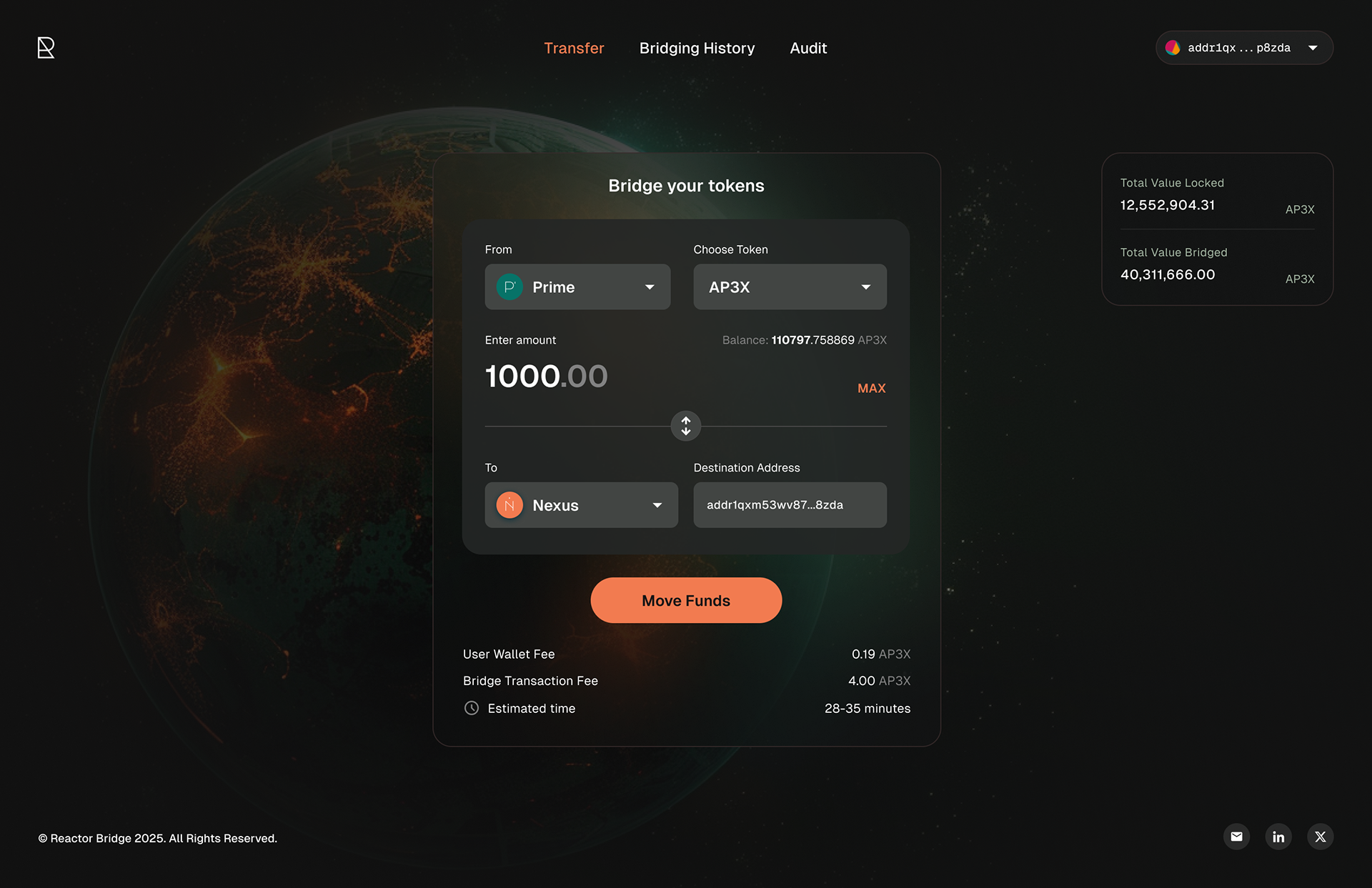
The Bridge platform is designed to facilitate the seamless transfer of AP3X tokens across multiple blockchain networks. This solution addresses the growing need for interoperability between different blockchain ecosystems, enhancing the utility and accessibility of digital assets.
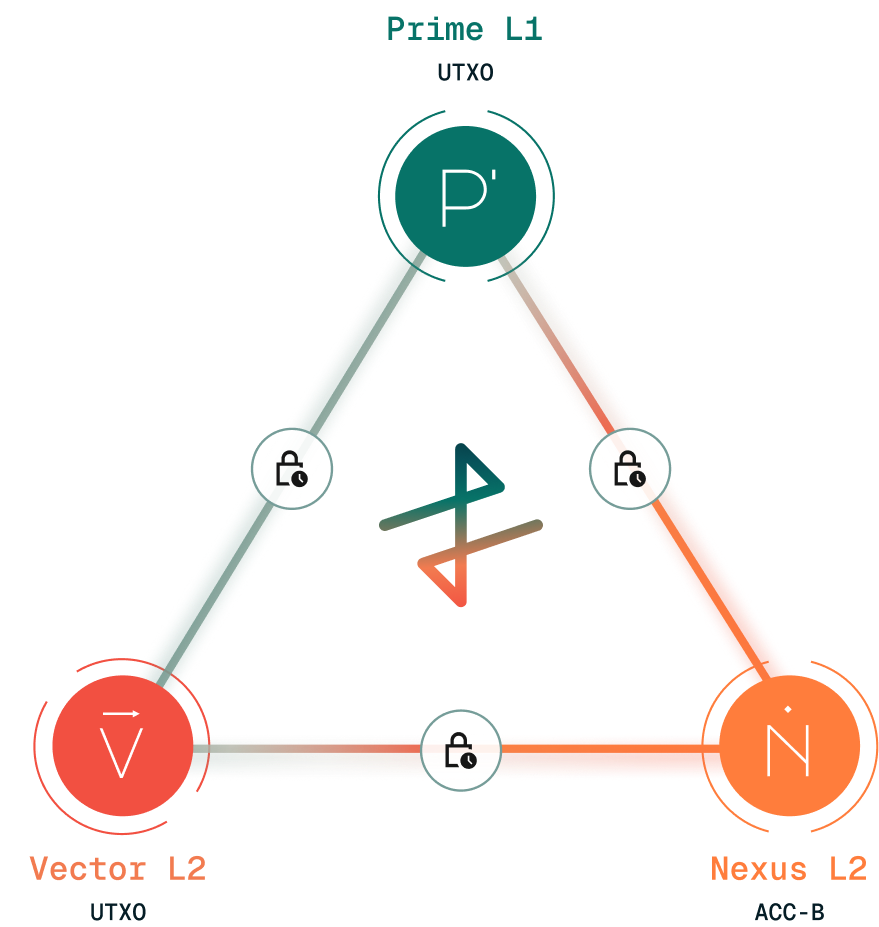
All blockchains in the Apex ecosystem use the APEX token minted exclusively on the Prime chain. Tokens are transferred between L1 and L2 chains via the trusted two-way Reactor Bridge. Thus, the locked tokens on the L1 chain always equal the released tokens on the L2 chains.
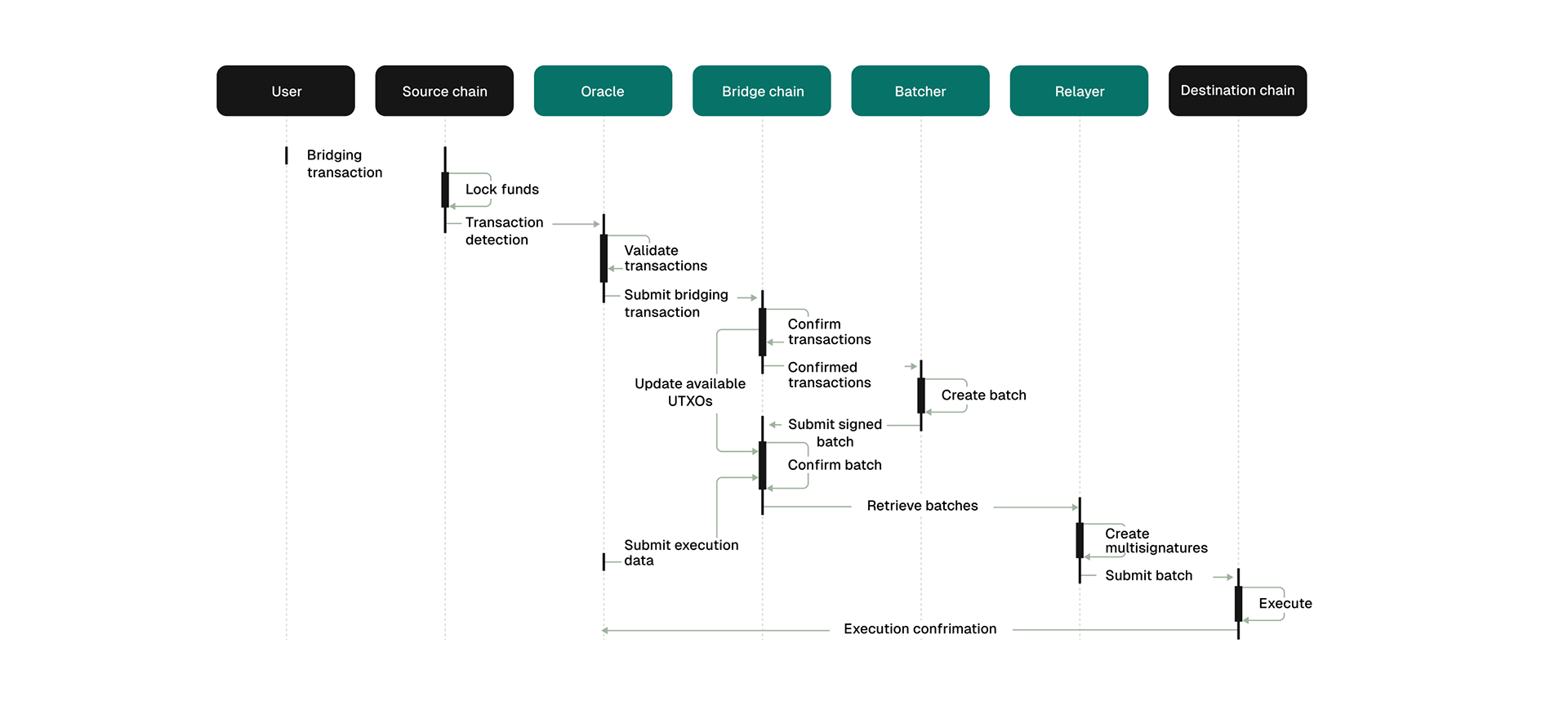
Reactor functions as a bridge blockchain, where validators collect, verify, and act on environmental events. Figure 2 illustrates the main components of the Reactor Bridge and their interactions during chain transmissions.
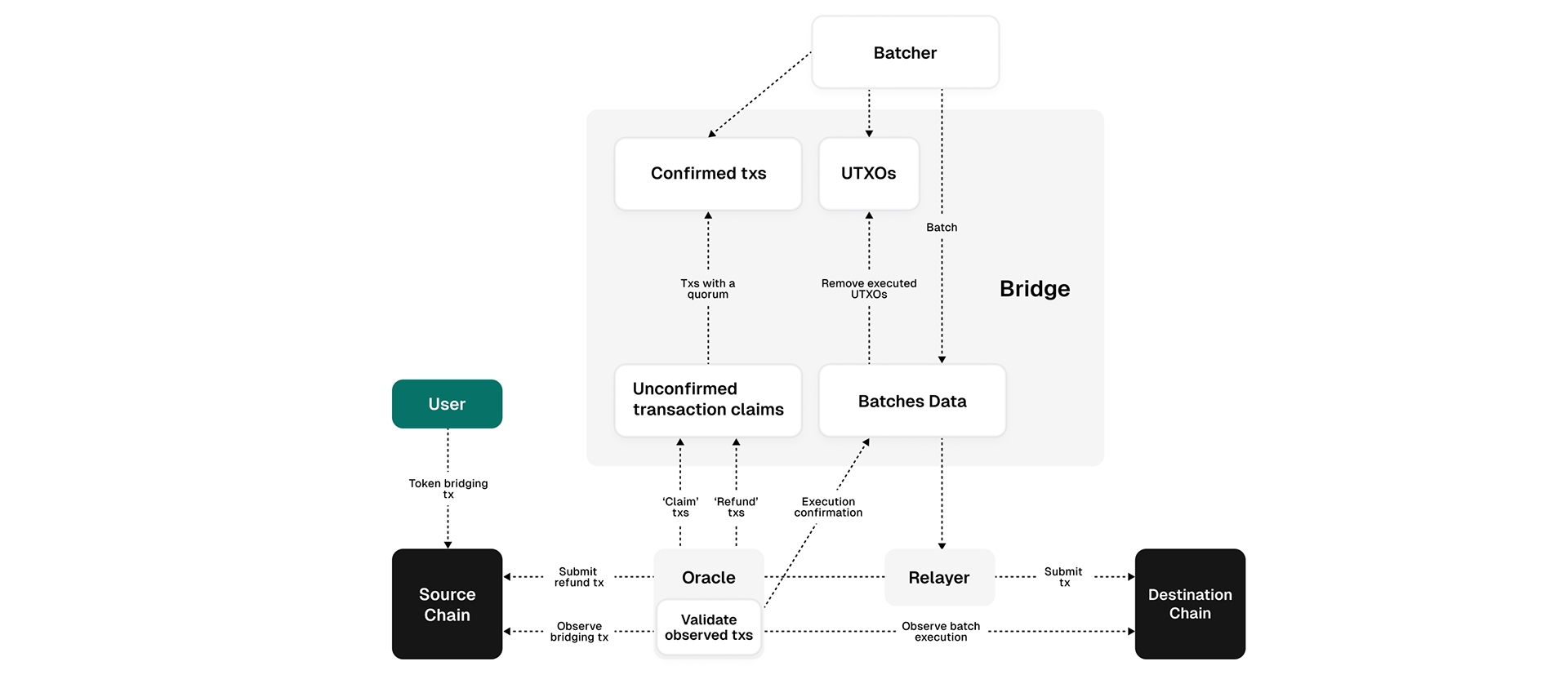
The main components:
- Oracle is an off-chain component run by each validator of the bridge blockchain. It monitors key events crucial to bridge operations, such as bridging requests, batch executions, and refund executions. These events are processed to facilitate accurate bridging decisions.
- Bridge Smart Contracts are designed to implement on-chain bridging logic. The processing of events sbmitted by Oracles takes place whithin.
- Batcher is another trusted off-chain of a validator. It monitors the bridge blockchain to determine when it's time to initiate batch creation. It then generates a batch instance representing the transaction that will be submitted to a destination blockchain.
- Relayer submits confirmed batches to the destination chain. It is a dedicated, trustless component operated as a standalone instance that can be run by any party. In essence, the Relayer retrieves batches from the bridge blockchain and submits the transactions to the destination chain.
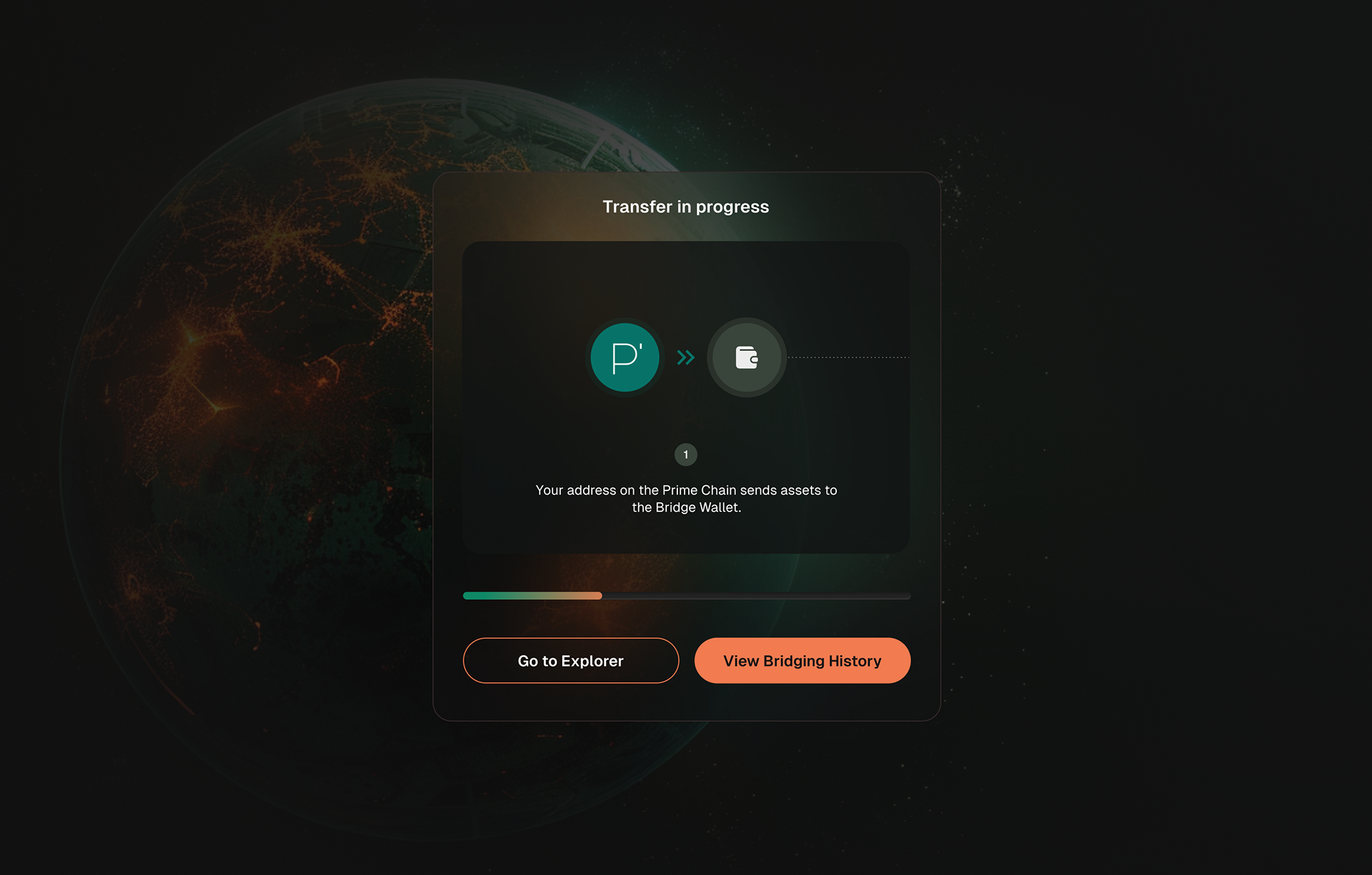
Transaction Progress
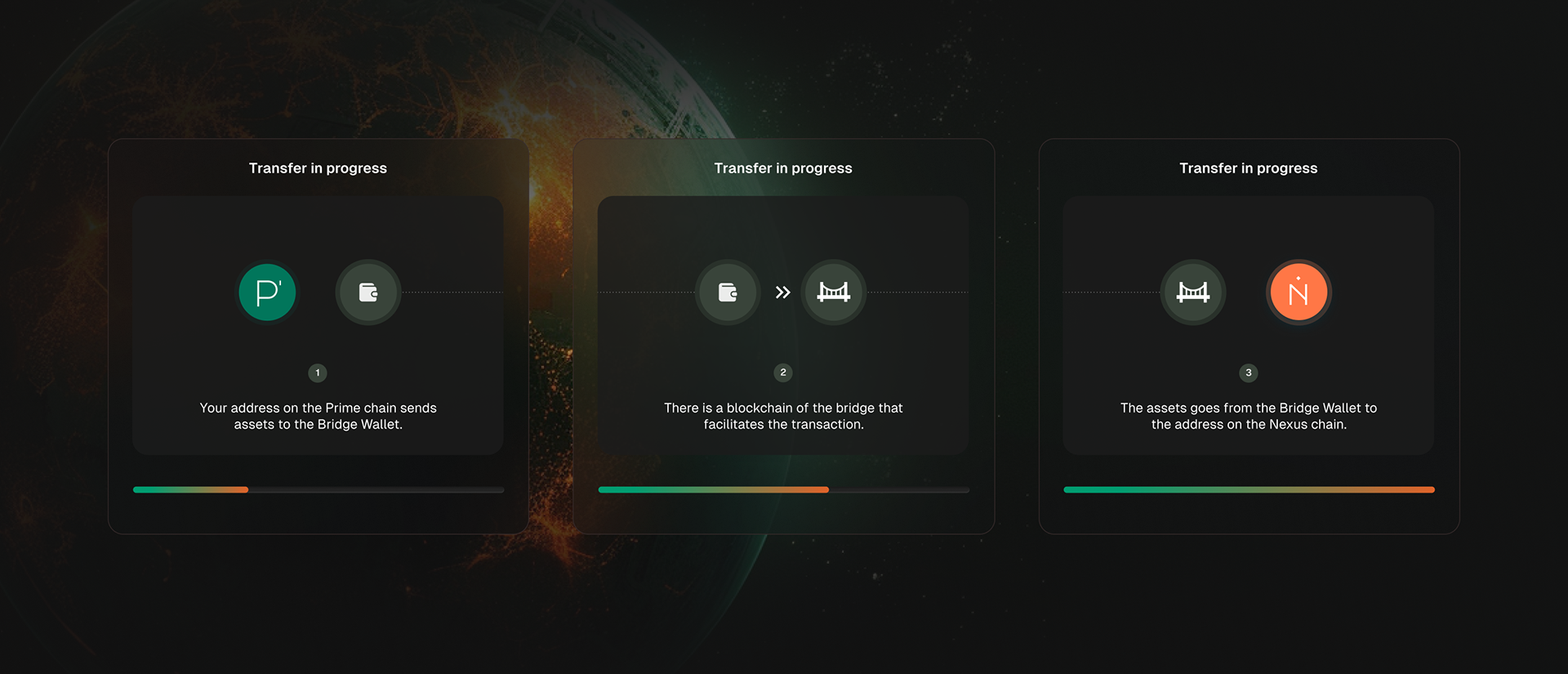
The transaction takes around 30 seconds. During this time, an infographic is displayed to educate users on the transaction process. Progress updates are provided:
1. The address on the Prime Chain sends assets to the Bridge Wallet.
2. The bridge utilizes its own wallet's blockchain to process the transaction.
3. Assets move from the Bridge Wallet to the address on the Vector Chain.
Bridging Initiation: A transaction on the source chain is subimtted in order to to cover fees and the bridged funds. The funds are locked at a bridge-controlled multisig address. The transaction metadata includes details like the destination address, chain ID, and amount.
Detection: Validators run an off-chain Oracle to monitor bridging requests by observing source chain transactions that output UTXOs to the bridge's multisig address.
Witnessing: Oracles submit a transaction (a cliam) to the bridge blockchain to confirm they have observed the bridging request.
Batching: Confirmed bridge transactions are stored on the bridge blockchain until a batch is created. A batch, a transaction executed on the destination blockchain, forms when enough transactions are confirmed or the maximum time limit between batches is reached. The batch may be UTXO or EVM transaction depending on the type of the destination chain.
Batch Confirmation: Validators confirm the batch by signing it with their private keys controlling the destination blockchain's multisig address or smart contract.
Submission: The batch transaction is submitted to the destination blockchain. The funds are unlocked and transferred to the destination addresses.
The Skyline Bridge enables the transfer of funds from the Apex Fusion ecosystem towards external ecosystem chains. This bridge allows AP3X tokens to move seamlessly between Apex Fusion chains (Prime, Nexus, Vector) and external networks (Base, BNB Smart Chain, and Cardano).
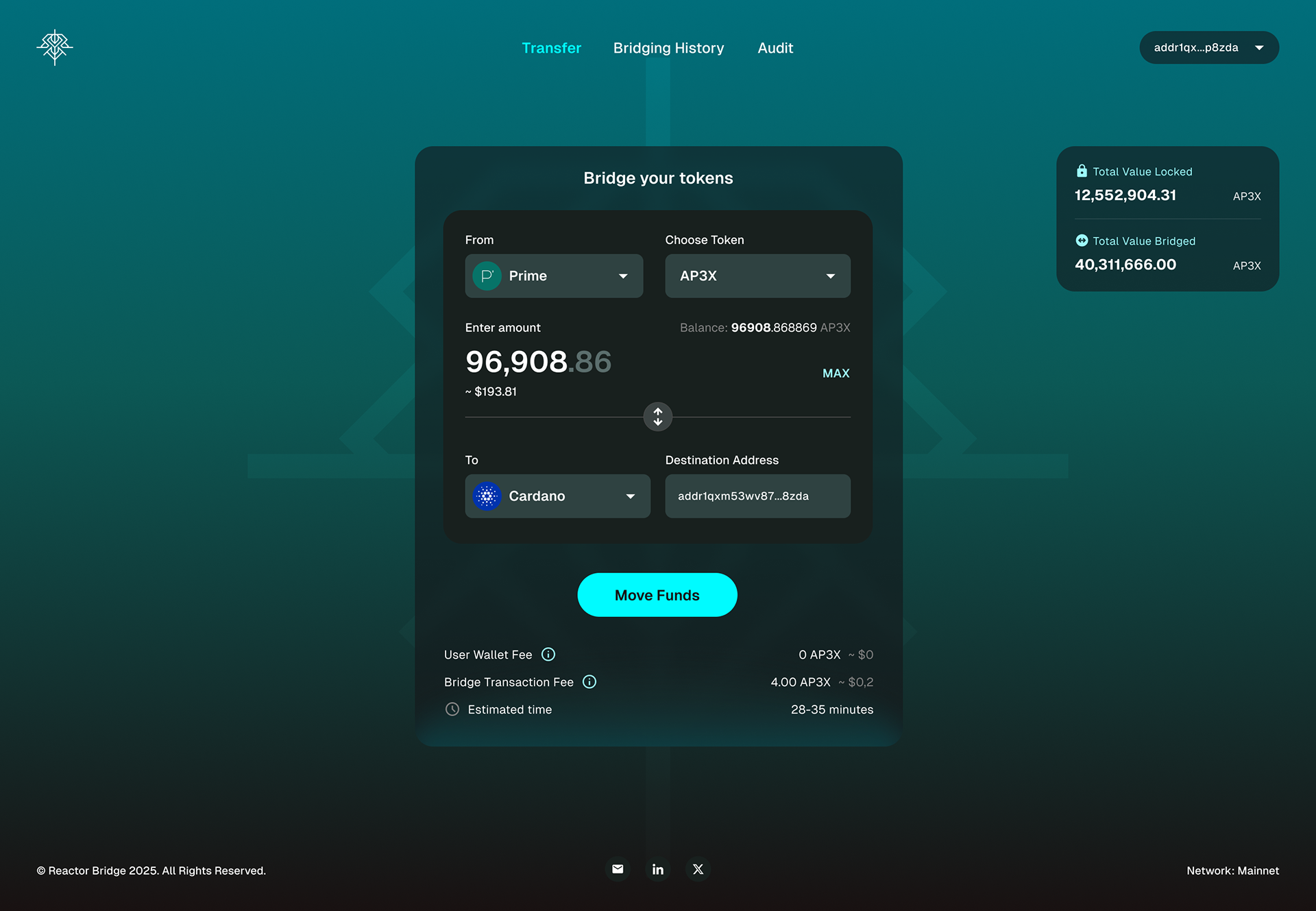
Skyline Bridge is a cross-chain bridging protocol designed to transfer tokens and assets securely and efficiently between blockchain ecosystems. Empowering cross-chain connections for the future of Web3, Skyline Bridge seamlessly bridges digital assets across blockchains—secure, fast, and reliable. It serves as your gateway to decentralized ecosystems.
Key Features:
Seamless Interoperability: Connect assets, applications, and communities across multiple blockchains. Skyline unlocks new possibilities for cross-chain innovation.
Decentralized Security: Powered by a multi-signature validation system, Skyline ensures trust and protection with every transaction.
Scalable and Efficient: Skyline batches transactions for optimized speed and cost-effectiveness, enabling smooth asset transfers for any ecosystem.